A Guide: How to Sit in a Kneeling Chair
Sitting comfortably on a kneeling chair is easy. Here are a few tips to keep in mind when trying one for the first time or while getting familiar with your new chair at home. This guide covers how to sit comfortably, answers common questions, and explains what to expect as you adjust to this new way of sitting.
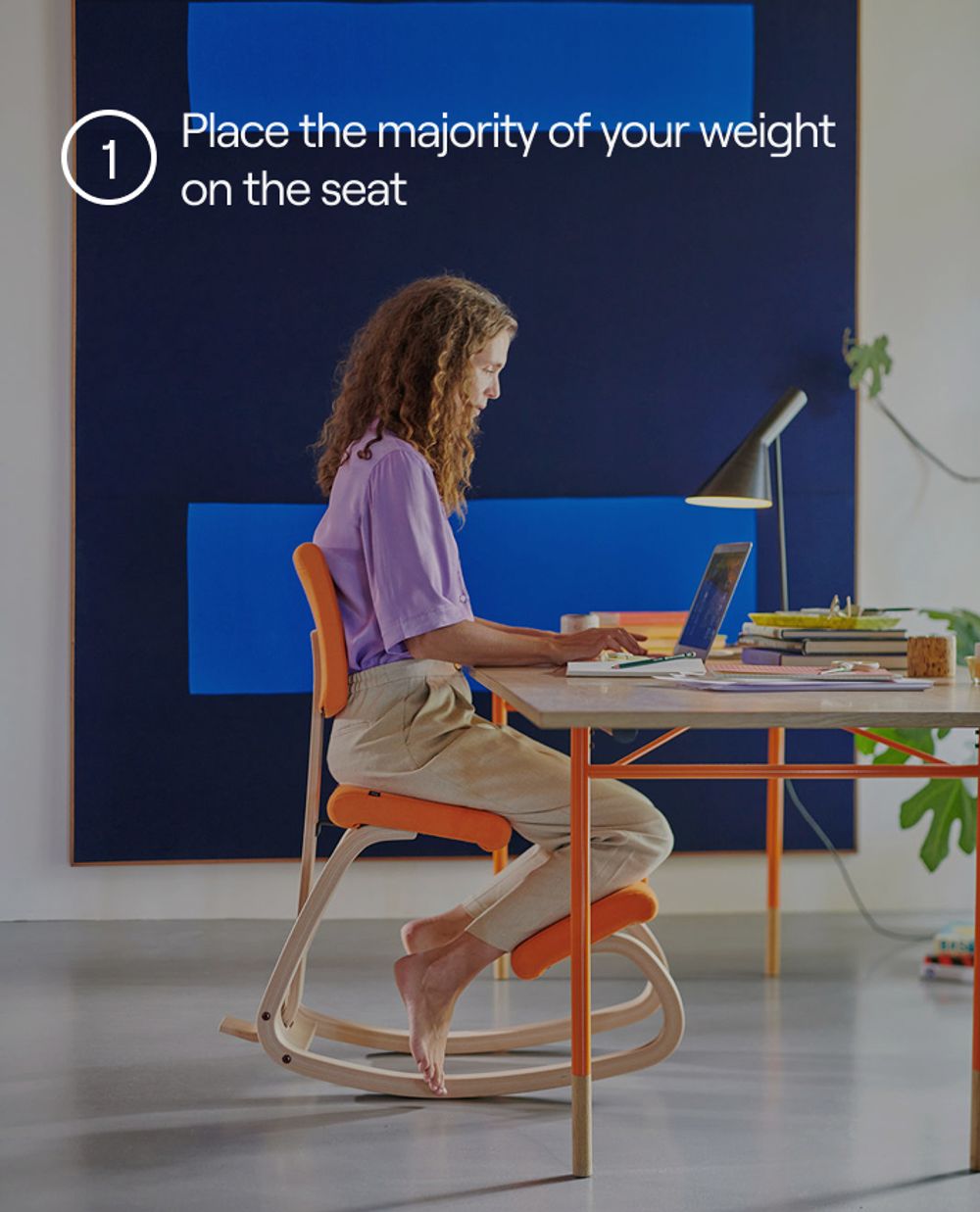
1. Let the seat support most of your weight
Begin by sitting bottom first on the seat, before placing your legs in the desired position. This could be a kneeling position or with your feet flat on the floor. Like with any chair, your bottom should carry most of your weight. The name kneeling chair can be misleading, as it may suggest that your knees take over this role. Instead, the cushions beneath the seat are simply there to support your shins, helping you stay balanced and preventing you from sliding forward on the tilted seat. If you get the sensation that you are being pushed forward and onto the shin cushions, try sitting even further back on the seat of the chair.
2. Set a comfortable distance from your desk
Notice the distance to your desk. Sitting too far away can create an exaggerated forward lean and unnecessary pressure on your shins. Moving the chair slightly closer to your table often brings the body back into balance.
3. Shift positions often
The best way to avoid discomfort while seated is to change position frequently. The true beauty of a kneeling chair is the freedom of movement and variation it allows. Locking yourself in one position, no matter how correct it supposedly is, will not feel good. We cannot stress this point enough. Like all other body postures, kneeling will als feel uncomfortable after a while.
Remember to vary positions frequently throughout the day, and don’t forget to take breaks. Stand up, stretch, or walk around every now and then to keep your body energized. You can also try simple desk exercises: roll your shoulders, rotate your torso, stretch your arms overhead, or gently bend forward to release your back.
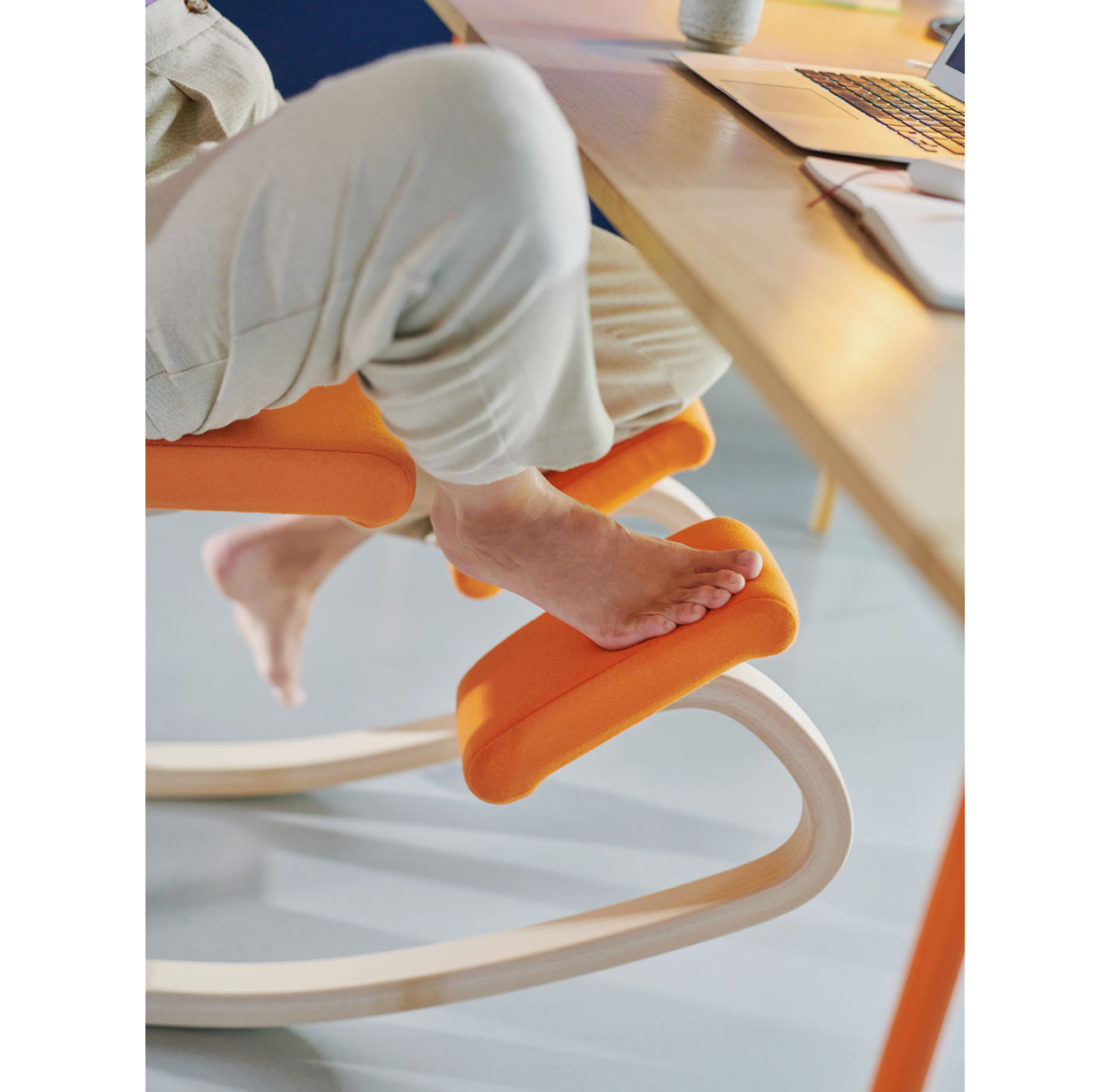
Have fun experimenting with the chair! Try using the shin cushions to rest one foot, both, or neither by placing your feet on the ground, and sitting in a more traditional posture. You can also turn around or sit sideways if you please. Lean forward, stretch out, and let the chair follow your body's natural movements.
4. Ease into it gradually
While many ergonomic office chairs tend to solely focus on supporting your upper body and back, sitting on a Varier kneeling chair involves the entire body. They prompt us to sit actively with an engaged core. At first, this might tire your abdominal and back muscles and you may experience soreness - this is completely normal. Be patient with yourself and allow your body the time it needs to get accustomed to this new way of sitting.
We believe that small steps can have a big impact on how healthy we feel. So don’t throw out your old office chair immediately. Keep your old office chair until you feel ready to transition to your new kneeling chair full time. In fact, keep your old chair long-term if you find it works better for you to continue switching between the two. Ultimately, we want our chairs to inspire a more balanced way of life. One where movement is an essential part of our everyday. So be sure to incorporate movement in a way that works for you.
Frequent asked questions about kneeling chairs
Is a kneeling chair supposed to put weight on your knees or shin?
No. The majority of your weight should be on the seat and your bottom. The shin cushions simply provide support when in the kneeling position, and give you the option of varying the position of your feet and legs.
How long should you sit in a kneeling chair?
It is best to change position regularly and vary between different ways of sitting. Movement helps the body stay comfortable, no matter what chair you sit in.
Do kneeling chairs improve posture?
A kneeling chair encourages an upright, active sitting position which requires gentle core engagement. Because of the tilted seat, you might feel less inclined to slouch (but it is not a complete solution). Read more here.
Is it normal to feel tired when using a kneeling chair?
Yes. Sitting on a kneeling chair invites the body to stay gently active, engaging muscles in the back and core that may not be used as much in traditional sitting.
A feeling of mild tiredness at first is natural and usually fades as the body adapts and becomes stronger over time.
Can you sit in other positions on a kneeling chair?
Yes. Freedom of movement is central to the design. You may rest one or both feet on the floor, sit more traditionally for a moment, turn sideways, or lean forward to stretch. The next position is often the most comfortable one.
How long does it take to get used to a kneeling chair?
Adjustment time varies from person to person. Some feel comfortable quickly, while others benefit from gradually increasing use over days or weeks. Keeping your previous chair nearby and alternating between positions can make the transition feel easier.